Kink vs fetish: what’s the difference?
Quick answer: kink vs fetish comes down to scope: kink is the wide umbrella for any sexual interest outside the standard script, while a fetish is one specific thing, such as a material or a body part, that becomes a central erotic cue. The two overlap, and clinicians separate an interest from a diagnosis, which needs distress or harm to others on top.

Andrea Leijon
Founder of Temple, twin-mom, wife and deeply passionate about supporting
people as they reclaim freedom in their bodies and sexuality.

It is late, the kitchen light is off and your phone is the only glow in the room. Something turned you on today, or a partner used a word that stuck, and now you are typing kink vs fetish into the search bar. You want to know which one you are looking at, and whether either is okay. I know many women and couples who have sat in that exact spot. Nearly half of 1,040 adults in one Quebec survey were curious about at least one less common sexual interest, so you are far from alone. Here is the answer in plain words.
If a word a partner used has you typing kink vs fetish into your phone tonight, many women and couples have asked the same question. Both words describe common interests, and neither is a diagnosis. A free kink test can show you where your own curiosity lives. Below you get plain definitions, what research says about how common both are, and a short self-check.
What is the difference between kink and fetish in plain words?
The difference between kink and fetish is scope. Kink covers any sexual interest beyond the usual routine, such as power play or role play. A fetish is narrower: one particular object, fabric or body part carries most of the erotic charge.
The two words get mixed up because everyday speech stretches them. People say they have a fetish for cozy sweaters or a tidy kitchen, and a kink for anything unusual. Clinicians and researchers use the words more narrowly, which is why the difference is worth spelling out. Our journal on what are kinks maps the main types if you want the wider picture first.
These interests are more common than the labels suggest. In a 2017 survey of 1,040 adults in Quebec, researchers Christian Joyal and Julie Carpentier found that close to half of the people interviewed expressed interest in at least one less common sexual practice, and about a third had tried one at least once. Men and women reported similar levels of interest in fetishism. If shame is the first feeling that shows up when you ask the question, our piece on where sexual shame comes from is a good companion.
If you want the whole difference as one picture, try this. Kink is the whole map, a fetish is one landmark on it, and plenty of the map has no landmarks. Praise or a game where one of you leads need no particular object to work. Leather boots can be a landmark all by themselves.
Kink is the whole map, a fetish is one landmark on it, and plenty of the map has no landmarks.
What does the kink side of the difference look like?
On the kink side of the difference sit the interests, activities and dynamics that step outside the standard script of kissing, touching and intercourse. It might be a blindfold, a role you play for one evening, a game of who leads, or a few well-chosen words said in the dark. Nobody keeps one official list, because what counts as outside the script tends to shift with culture and with each couple.
Many kinks have one thing in common: they turn up the contrast. Power moves to one of you for a night, a sensation gets louder, or a small story with its own script takes over from the usual routine. For many people that contrast is where the charge comes from, and it needs no special object.
Kink shows up in ordinary life more quietly than the movies suggest. One partner may love the idea of being led for an evening and still want the rest of the evening to look like any other: dinner, a show, the dishes. Another may find that a slow, bossy voice in the hallway changes the whole mood. Both are kinks, and both sit comfortably next to a very ordinary relationship.

Being curious about something outside the usual script is ordinary. Curiosity is allowed to stay curiosity for as long as you like.
Everything in this article assumes adults who are all willing and free to change their minds at any point. An interest in a kink is a starting point for a conversation with yourself, and you decide if and when it goes further.
If you relate to this, we've gathered all you need – in one place.
Lessons and exercises from the Liberation course.







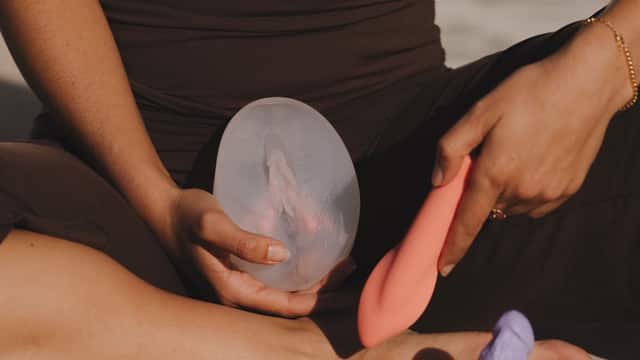






What is a fetish, and which ones are most common?
A fetish is a strong, specific erotic cue: one object, material or body part that becomes central to arousal, such as leather, satin or feet. For some people it is an extra layer on sex they already enjoy, and for others it carries much of the charge.
What do people find arousing in practice? A 2007 analysis of 381 online discussion groups by Scorolli and colleagues found that body parts or features (33 percent) and objects usually associated with the body (30 percent) were the most common targets of fetish preferences, with feet and foot-related objects leading the list. The study counted online discussion groups, so it is a snapshot of what fetish communities talk about and says little about the population at large.

A fetish is personal, down to the detail. For one person it is the weight of a leather jacket, for another the click of heels on a hallway floor or the feel of satin against the skin. Two people can use the same word for their interest and describe very different things, so it helps to ask what exactly draws you in.
Temple’s Liberation course has a lesson on kink with Aleksandra Trkulja, Temple’s Sex & Relationship Therapist, that explains what kink, BDSM and a fetish are, and it is best taken after Foundation.
Researchers have no single settled explanation for why one person’s arousal attaches to a specific cue, and the science is still thin. What you are drawn to and what you choose to do are separate questions, and consent lives in the second.
What you are drawn to and what you choose to do are separate questions, and consent lives in the second.
Kink vs fetish: where do they overlap?
They overlap wherever a specific cue becomes part of a wider kind of play, such as leather, latex or silk in a scene about power. A fetish can live inside kink, and plenty of kinks never involve one. The two words describe scope and focus, so one person can have either, both or neither.

The line between the two can blur, and that is fine. A leather harness might be a fetish object for one person and a prop in a story about who leads for another. A useful test is what the thing does for you: if the material itself is the point, it leans toward fetish, and if it plays a part in a dynamic, it leans toward kink.
Doctors have their own words for this, and they can sound alarming until someone translates them. A paraphilia is the clinical term for a persistent, intense and atypical pattern of sexual arousal. Writing in a 2014 paper on the DSM-5, the psychiatric manual used in diagnosis, Michael First explains that DSM-5 redefined the word, so a paraphilia alone is no longer treated as a diagnosis. A paraphilic disorder needs more: the same pattern plus clinically significant distress or impairment, or involvement of people who have not consented.
The American Psychiatric Association puts the everyday takeaway plainly in its DSM-5 fact sheet: “Most people with atypical sexual interests do not have a mental disorder.” A diagnosis such as fetishistic disorder is a separate thing from having a fetish. In general, clinicians using DSM-5 diagnose a paraphilic disorder only when a person feels personal distress about the interest, beyond any distress that comes from society’s disapproval, or when the interest involves another person’s psychological distress, injury or death, or people who are unwilling or unable to consent.
In plain words, a fetish or a kink describes what draws you in, and a diagnosis only comes in when distress or harm to others is part of the picture.

How can I tell where my own curiosity sits?
Three plain questions show where your own interest sits: whether it stays flexible or feels required every time, whether it feels good or comes with shame, and whether everyone involved wants to take part. Your answers describe where you are today, and they can change.
Flexible or required: You may enjoy a cue when it is there and enjoy sex just as much without it. Notice whether the cue adds something to sex or has to be there before anything can happen. If sex feels flat without it, that is useful information and worth a calm conversation.
Good or shameful: Does thinking about it feel warm, playful or curious, or does it bring dread, secrecy or a sinking feeling afterwards? Imagine telling a trusted friend who loves you, and notice the feeling that rises. Shame often comes from what you were taught. If the dread is strong, our article on fear of sex may help you see where it comes from.
Only willing adults: A kink or fetish that involves other people works when everyone is an adult, wants to be there and can say stop at any time. That includes stopping partway through and having it respected without a sulk or a debate.

Take the free kink test to go deeper: in three minutes it shows which of four curiosity profiles fits you right now. To compare with a partner, Temple’s kink list quiz lets you each rate 20 kinks and see what you both like. It describes your responses and does not diagnose anything, so treat the result as a starting point for curiosity. What matters is whether it feels good, stays flexible and includes only people who want to be there.
What matters is whether it feels good, stays flexible and includes only people who want to be there.
When does a fetish matter in a relationship?
A fetish is worth a conversation when it becomes necessary for arousal, when one partner feels like a stand-in for the cue, or when shame and secrecy start to build around it. Otherwise it can be one of many ways people turn each other on, and some couples enjoy it openly.
See how Temple works, in under three minutes.
Those signals simply mark the point where a private interest becomes a shared one, and shared things go better with kind, clear words. A question asked over Sunday coffee tends to land softer than one asked at midnight in bed. Partners rarely want identical things, and a difference in what turns you on is one more version of the gaps many couples live with, which our piece on desire discrepancy in couples explains. Our guide to how to set a boundary helps with the other half, saying no kindly when something is outside your range.
What helps if the questions keep coming back?
Temple’s Liberation course (20 expert-led video lessons, 8 guided video exercises) lets you go deeper into kink and how to explore it safely and works best after Foundation (23 expert-led video lessons, 15 guided video exercises). Each lesson and exercise takes 10 to 15 minutes, so they fit into an ordinary evening.
If the topic carries a lot of distress, or you cannot talk about it without a fight, a sexologist or sex therapist can help the two of you. The Royal Berkshire NHS Foundation Trust describes psychosexual therapy as help for people who have difficulties in their sexual relations, whatever the source, and our guide to what a sexologist does explains how to find one. Temple offers mental and somatic support alongside medical care, and the two work well together.
If a friend has ever whispered a question like this to you, send her this article, because the line about the map and its landmarks fits in one text.

You arrived with two words and leave with a map, and your own three answers show where you are standing on it. Give your self-check a few quiet minutes over tea today, and if shame came up, how your sexual brakes and accelerators work is the natural next read.
Love, Andrea.
The numbers behind this
See the anonymous Temple quiz numbers on kinks, as percentages. See the data →

Frequently asked questions.
More like this, straight to your inbox.
A letter from Andrea when there is something worth saying. No schedule, no noise. Just the honest, science-backed writing you found here.

Go deeper with
Liberation
Liberation is Temple's third course – expert-led video lessons and ongoing support to turn this into lasting change.