Erotophobia: why sex can feel scary and what helps
Quick answer: erotophobia, a strong fear of sex or of sexual closeness, is often a learned protective reaction, and what has been learned can often be eased. It can look like a tense body, a racing mind and a wish to be anywhere else when intimacy gets close. Keep reading for what causes it, why avoiding sex tends to feed the fear, and what helps.

Andrea Leijon
Founder of Temple, twin-mom, wife and deeply passionate about supporting
people as they reclaim freedom in their bodies and sexuality.

I know many women with erotophobia, a strong fear of sex, who love their partner, long for closeness and still feel their whole body brace the moment a kiss turns into something more. They rarely say it out loud. Instead they find a reason to stay up late, start a long conversation in the kitchen, or hope it will be over soon. If that sounds familiar, you are in good company: studies find that between 6 and 16 percent of women feel anxious about sexual performance alone. In this article I walk you through why sex can feel scary and the small, gentle steps that help, at a pace that is yours.
You may have tried to relax, to push through it, or to wait until the fear passed on its own, and none of that has helped much. Erotophobia, a strong fear of sex or of sexual closeness, is often a learned protective reaction, and what has been learned can be eased. The word sounds clinical, yet the experience is familiar: a tense body, a racing mind and a strong wish to be anywhere else when intimacy gets close. This article shows what causes it, why avoiding sex makes the fear grow, and the small steps that help.
What is erotophobia, and why does sex feel so frightening?
Erotophobia means a persistent fear of sexual activity, sexual touch or even sexual thoughts, stronger than ordinary first-time nerves. It ranges from a flutter of dread before sex to avoiding intimacy altogether. Only a doctor or therapist can say whether a fear reaches the level of a specific phobia, and you do not need a label to deserve help.
In the body, the fear often shows up before you have decided anything: a tight chest, a clenched jaw, shallow breathing, a stomach that drops the moment the bedroom light goes off, or a mind that goes blank or races through every way the evening could go badly. Some women freeze, some find a reason to leave the room, and some go through the motions while feeling far away. None of this says anything about how much you love your partner. This fear shows up in women of any age, in new relationships and in marriages of twenty years.
The fear rarely has one cause. Common ones include sex that felt rushed or pressured in the past, a strict or shame-filled upbringing, worries about how your body looks, fear of failing at sex, ongoing stress that keeps your body on alert, and a history of trauma or abuse, which Cleveland Clinic names among the causes of sexual performance anxiety. Several of these usually overlap. To see how a body on alert switches desire off, read our journal on the nervous system and libido.
Worry about performance is a close relative of this fear. A 2020 review of population surveys found that sexual performance anxiety, the worry about how you will do or how you will be seen during sex, affects 6 to 16 percent of women and can severely inhibit sexual desire. That is a lot of women who spend sex worrying about how they come across.
Fear of sex is a protective reaction, and your body is trying to keep you safe even when it overshoots. Freezing, leaving the room and going through the motions are the same alarm in a different outfit. Pushing through it rarely works.
Freezing, leaving the room and going through the motions are the same alarm in a different outfit.
Why avoiding sex makes the fear grow
Avoiding sex gives you relief right away, and that relief keeps the fear going. When you step away from a scary moment, your body calms down and your brain files the moment as proof that it really was dangerous. The next time, the alarm rings a little louder.
Small safety habits work the same way: a drink to take the edge off, eye contact kept to a minimum, getting through it without enjoying it. Sex and relationship therapist Aleksandra Trkulja teaches this loop in the Avoidance Cycle lesson in Foundation, together with the way out: meeting what scares you in small, manageable steps, so your nervous system can learn that you are safe. Pressure, from yourself or from a partner, only confirms the alarm.
If you relate to this, we've gathered all you need – in one place.
Lessons and exercises from the Foundation course.












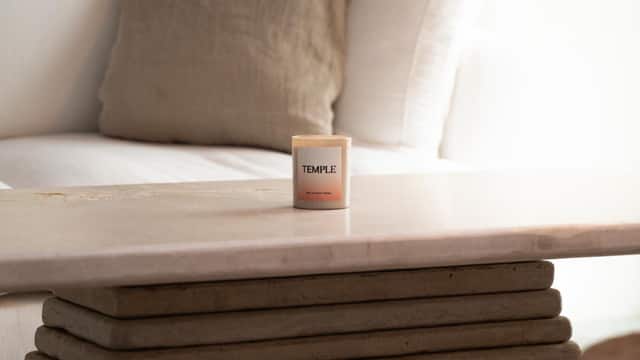

Your fear makes sense, and it can change.
I started Temple because the starting point deserves its own space: safety first, exploration afterwards. In our first course, Foundation, we begin with exactly that, and we practice it as a daily skill. Each expert-led video lesson and guided video exercise takes 10 to 15 minutes, so it fits into a normal day.
Why safety comes first
A nervous system needs safety before anything else can happen. When your body believes it is safe, it can notice pleasure. When it does not, it scans for danger and pleasure waits.

That is why softness, time and the freedom to say stop matter more than any technique, and why a partner who slows down gives you something no trick can replace.
Expect progress to move in waves. A good week can be followed by a tense one, and that is how a body learns: by repeating a safe experience until the alarm quiets down. When a step goes badly, go back one step, take a breath and try again another day. Nothing is lost, and you decide the speed.
When a step goes badly, go back one step, take a breath and try again another day.
How fear of sex shows up in a relationship
In a relationship, fear of sex often looks like something else. You may find reasons to go to bed at different times, flinch at an ordinary hug in case it leads somewhere, or snap over small things because the closeness underneath feels risky.
Your partner sees the distance, may read it as rejection or lost attraction, and pulls back too. Soon two people who care about each other are circling the same silence.
If you are the partner of someone who is afraid of sex, the distance can hurt in its own way. You may wonder whether you are the cause, or whether the attraction has gone. In most cases the fear comes from what their body learned earlier. Patience, asking what feels safe and celebrating small steps will do more than any reassurance speech.
The way out starts with talking, and the numbers point the same way. Britain's third National Survey of Sexual Attitudes and Lifestyles interviewed 15,162 people in 2010 to 2012. Women who could not talk easily about sex with a partner had 2.82 times the odds of low sexual function, meaning a score in the lowest fifth on a sexual function measure, after adjusting for age. The first job is to say it out loud, in one calm sentence.

Start from your own experience: "Sex has started to scare me, and I want to work on it with you." Agree on a stop word that ends anything at once, and begin with touch that is not meant to lead anywhere. If your partner wants sex more often than you do, the journal on desire discrepancy in couples helps with that gap, and how to overcome intimacy issues shows how to rebuild closeness step by step.
Choose the moment for this talk with care. Skip the bedroom and the minutes before sleep, and try a walk, a drive or the kitchen table, where sex is not on the table and the pressure drops. Say how long you need and ask for one small thing. If the talk gets heavy, pause it and pick it up the next day. Fear gets smaller when it is spoken out loud and bigger when it stays a secret, so a calm, unhurried moment is worth waiting for.
Fear gets smaller when it is spoken out loud and bigger when it stays a secret.
Temple's Exploration course goes further into asking for what you want and touch without an agenda, and we recommend starting with Foundation, since almost everyone grows from it.

What helps when sex feels scary
These are three ways to tell your body that closeness is safe, in an order you control.
Go slowly, one small step at a time: Pick a step that stretches you a little without setting off the alarm, such as a long hug, then touch with clothes on, then more, and stay at each step until it feels almost boring. Some nerves are normal at every step, and you can stop at any time. The NHS lists talking therapies such as cognitive behavioral therapy (CBT), which changes unhelpful patterns of thought and action, among the treatments for phobias.
Calm your body before you begin: Slow breathing with a longer exhale, a warm shower, a walk or music you love all tell your body the day is over. In a 2014 study of 117 women with low desire, four 90-minute group sessions of mindfulness, which means paying attention to the present moment without judging it, plus cognitive therapy and education improved desire, arousal and satisfaction compared with women who waited three months for treatment.
Name what puts the brakes on: Fear usually has specific triggers, such as a time of day, a kind of touch or a thought about your body. Write down what turns the volume of the fear up and what turns it down, then use the journal on sexual brakes and accelerators as your map. What would feel safe enough to try this week?

These steps work together and none of them needs to be rushed. Many women also notice that wanting arrives after pleasant touch has begun, a pattern called responsive desire, so there is no need to wait for the urge first.
Sex anxiety and the medical side: when to get extra support
Sex anxiety, the worry and tension that rise before or during sex, can have physical causes too. A doctor visit is a sensible early step if sex hurts, if the fear started after a medical event, a new medication or a hormonal change such as pregnancy or menopause, or if it appeared suddenly.
A doctor can check hormone levels, review medications and refer you to a specialist. It helps to know what to bring. Write down when the fear started, what makes it stronger, what makes it easier and any physical symptoms, so the appointment stays focused. Ask directly whether your fear could have a physical or hormonal part. Most doctors and therapists have heard this before, and you are allowed to set the pace there too.

If the fear is tied to trauma or past abuse, look for a trauma-informed therapist, someone trained to work gently and at your pace. In England you can refer yourself to an NHS talking therapies service without a GP referral. Temple offers mental and somatic support alongside medical care, and the two work well together.
A doctor checks the body and a therapist works with the fear, so together they cover it all.
If you are anything like I was after that coaching session, holding advice that did not fit you, remember that your body is doing its job. It asked for a different order of things: safety first, newness later.
What can you do when nothing seems to shift?
Temple's Foundation course, 23 expert-led video lessons and 15 guided video exercises, helps you rebuild safety in your own body and get desire back.
A therapist, a doctor or a sexologist can also help, especially if you want someone to look at the whole picture with you. Sexologists and sex therapists can help with fear around sex, so bringing it to them is a reasonable step. Sometimes the fear is strong enough that a clinician may see it as a specific phobia, and treatment can help.
If you know someone who has been carrying a quiet dread around sex, share this article with her, so she knows the fear has a name and a way forward.

To go deeper, take the six-question, two-minute Pleasure Blocker quiz to find what holds your pleasure back, and read intimacy issues in relationships next.
Love, Andrea.

Frequently asked questions.
More like this, straight to your inbox.
A letter from Andrea when there is something worth saying. No schedule, no noise. Just the honest, science-backed writing you found here.

Go deeper with Foundation
Foundation is Temple's first course – expert-led video lessons and ongoing support to turn this into lasting change.