What Is a Sexologist? (And Do You Need One?)
Quick answer: a sexologist is a professional trained in the study of human sexuality, while a sex therapist is usually a licensed mental health professional. The title sexologist is not protected in most countries, so training varies. You may not need one to get started: everyday questions about desire or communication usually benefit from education first, while trauma, diagnosable pain or a crisis call for a licensed clinician.

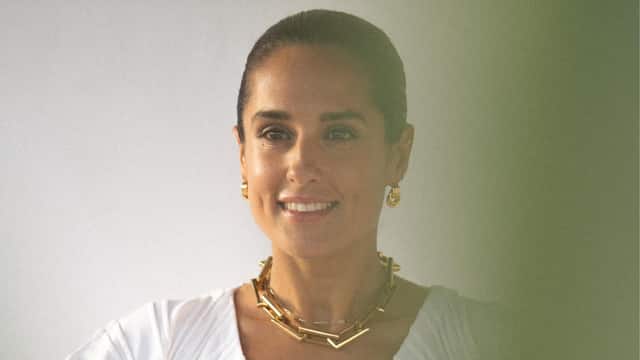
Andrea Leijon
Founder of Temple, twin-mom, wife and deeply passionate about supporting
people as they reclaim freedom in their bodies and sexuality.

You may wonder what a sexologist does, whether that is the same as a sex therapist, or whether you need one. The answer depends on the person, the training behind their title, and what you are trying to solve.
A sexologist is a professional trained in the study of human sexuality, who helps people understand desire, arousal, relationships and the body through education and counseling. A sex therapist is usually a licensed mental health professional with added training in sexual concerns, which makes them the better fit for pain, trauma or a relationship in crisis. In most countries the title sexologist is not legally protected, so training varies a great deal from one person to the next. For most everyday questions about desire, communication or your own body, a sexologist, a sex coach or a well-built course can do real work without ever requiring a diagnosis.
Somewhere between a search at midnight and a friend's offhand "you should see someone about that," most people run into the word sexologist without anyone ever explaining what it means. A doctor, maybe. A therapist. Someone with a certificate from a weekend course, possibly. The honest answer depends entirely on who you ask, and that confusion is reasonable. Nobody handed any of us a map for this. That gap is what this piece closes.
What is a sexologist, and what do they do?
A sexologist is someone trained in the study of human sexuality, its biology, psychology, and social patterns, and the work can look wildly different from one person to the next. Some come from psychology or medicine, some from public health or social work, some from somatic or embodiment traditions, and some specialize further into research, education, or one-to-one counseling. What they share is a focus on sexuality as a legitimate subject of study, not a side note to something else, and not a punchline.
Here is the part most people never get told: in most countries, including the United States, sexologist is not a legally protected title, so anyone can use it, in the same loose way anyone can call themselves a coach or a consultant. A clinical sexologist usually signals something more specific, often a graduate degree plus certification from a professional body such as AASECT. Neither of those is a legal license the way "psychologist" is in most places, but they are a genuine, checkable marker of structured training, and asking about them directly is normal, not rude. A sexologist's real job is education: helping you understand a system nobody ever taught you to read.
A sexologist's real job is education: helping you understand a system nobody ever taught you to read.
What Is a Sex Therapist? (Sexologist vs. Therapist vs. Coach)
A sex therapist is usually built on top of an existing clinical license, a psychologist, a counselor, a social worker, plus additional training in sexual concerns specifically. That underlying license lets them work with trauma, diagnosable dysfunction, or a relationship in crisis. In most states and provinces, "sex therapy" is not a separately licensed profession. It is a specialization layered onto one that already is (licensing for this title varies by country). Researcher John Bancroft, one of the field's more careful voices, spent decades insisting that sexual difficulties be studied with the same rigor as any other health question, not waved off as personality quirks. That rigor is what a real therapy credential is supposed to guarantee.
A sex coach sits in different territory: forward-looking, practical, and non-clinical, with no diagnosis and no treatment plan. Coaching tends to fit communication, confidence, and curiosity questions well, the kind where nothing is broken so much as never taught. None of these three roles outranks the others. They answer different questions. Choose the kind of support that matches what you need help with.
Choose the kind of support that matches what you need help with.

At Temple, this is exactly the license our own course material is built on. Aleks Trkulja, a licensed sex and relationship therapist who is also trained in trauma therapy and body-image work, is one of the people behind Temple's course content, which is part of why the work goes as gently, and as deep, as it does. The two roles have different training and scope, so it helps to know which kind of support you need. You can meet the experts behind the courses on the Temple team page.
What happens in a session with a sexologist?
Here is what that could look like, if you went for the first time. First, you talk: what brought you in, what you have already tried, what has not worked. Then, once there is a shared picture of what is going on, the next step is usually a plain explanation of how arousal and desire work in a body like yours, the kind of thing nobody ever sat you down and taught. Almost everyone wants one small, doable thing to try before the next visit, which is why most sexologists send you home with exactly that: a sentence to practice saying out loud, a body-awareness exercise, a short journal prompt. And because feeling exposed is the last thing that helps, you would probably also notice that the pace is set by you, not the clock, so the whole thing ends up feeling closer to a calm conversation than anything clinical.
If you relate to this, we've gathered all you need – in one place.
Lessons and exercises from the Foundation course.
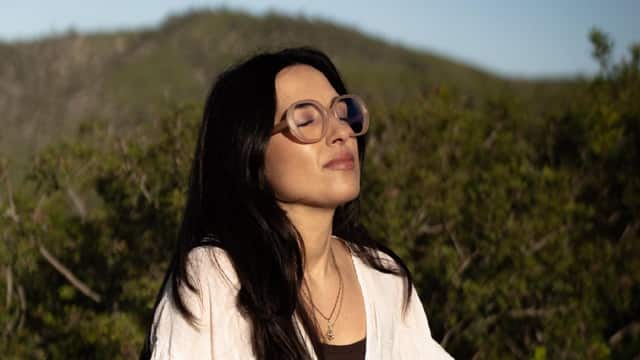












Tips to get more out of your first session
A first session tends to go further when you walk in a little prepared, not with a script, just a rough sense of what you want out of it.
Be clear beforehand about what you want, and say it out loud. "I want to understand why my desire disappeared" gets you somewhere faster than hoping the practitioner guesses correctly.
Bring one or two concrete examples. A specific moment says more than a general feeling, and it gives the sexologist something real to work with instead of an abstraction.
Ask about their training early, not apologetically. The four questions further down are a good starting script, and any legitimate practitioner expects to be asked.
Say what has not worked before. If a previous approach missed the mark, that is useful information, not a complaint, and it helps this session avoid repeating it.
Give feedback in the room, not just after. If an exercise feels rushed, or something does not sit right, saying so in the moment is exactly what a good practitioner wants to hear.
Do not expect one session to fix everything. Most real change happens between sessions, in the small, unglamorous practice of trying the one thing you were given.
One clarification matters more than the rest: in a clinical or educational setting, a sexologist does not touch you, ever. That boundary exists for good reason, and any legitimate professional will be upfront about it before you ever book a first session. Related practices, like sexological bodywork, operate under their own separate, explicit consent and touch protocols, and mixing the two up is where a lot of public confusion, and some real harm, comes from. A between-session exercise is usually something small and self-directed, noticing one body sensation without judging it, trying one honest sentence with a partner, reading a specific chapter, never anything performed in the room itself.
What does a somatic sexologist do?
A somatic sexologist works from the premise that a lot of what gets called a "mindset problem" is stored in the body, in breath, posture, and a nervous system still braced for something that is no longer happening. The lineage here draws on educators like Betty Martin, whose Wheel of Consent reframed touch and desire as something to be actively negotiated rather than assumed, and it leans on body-based practices, not just conversation, to get somewhere talk alone tends to stall out.

Psychologist Lori Brotto's research on mindfulness-based approaches to women's sexual concerns found measurable improvements in desire and satisfaction when attention training was added to standard treatment, which is a real evidence bridge between "sit with the sensation" and outcomes a clinician can measure. It is also close to Temple's own lineage: the courses lean on embodiment work for exactly this reason, because understanding a pattern in your head and feeling safe enough in your body to change it are two different jobs.
Do you need a sexologist?
You may not need a sexologist to get started. Questions about how your desire works, mismatched libidos, communication, or plain curiosity about your own body usually benefit from education first, the kind a sexologist, a coach, or a structured course answers well. Trauma, diagnosable pain, a crisis a couple cannot talk their way out of, those call for a licensed clinician. What most people need, more often than a diagnosis, is someone willing to explain, plainly, how their own body works. Curiosity about kink or power play counts too, and our journal on BDSM for beginners covers consent, hard and soft limits and a gentle first evening.

I want to share something from my own life here. My husband and I went through countless sessions trying to reconnect after our twins were born, with coaches, sex coaches, talk therapists, and every one of them stayed in the conversation and never once brought the body into the room. Then he found an embodiment teacher, and something that had felt stuck for years started shifting within days. The talking mattered, but the body-based work was what finally let both my mind and my body feel seen. That is a large part of why Temple exists at all.
A sexologist’s guidance or a course can sit alongside therapy, with education and individual support serving different needs. Temple offers educational mental and somatic support, not medical care. The two can work well together.

What to look for, and what to do next
Since the title itself is not policed, you need to check each practitioner’s training and credentials. A trustworthy sexologist names their training plainly, points to a real certifying body when one exists, and is comfortable saying "that's outside what I do, here's who to see instead" without treating it as a failure. The pattern across the Nordic countries and much of Europe is similar to the United States. Universities and independent institutes offer sexology training, but law rarely restricts the title. So ask about credentials rather than assume they are in place.
A short list of direct questions tends to sort the field quickly: What is your training, specifically, and how long did it take. Do you hold a license, and in what. What happens if what I bring to you turns out to be outside your scope, do you have someone to refer me to. What does a first session involve, and what does it cost before any package or add-on is mentioned. A practitioner who answers all four plainly, without getting defensive, has just told you almost everything you need to know before a single session happens.
Treat a few things as real warning signs. Watch for anyone who guarantees a specific outcome. Watch for anyone who moves toward touch or exercises that feel rushed or hard to say no to. Also watch for anyone who waves off an obvious referral instead of naming it and pointing you toward the right help. That includes persistent pain, a recent trauma, or a mood disorder tangled up with the sexual concern. A good practitioner is more interested in getting you to the right room than in keeping you in theirs, and treats "I don't know, let's find out together" as a perfectly acceptable answer.

You do not need the perfect label before you are allowed to ask for help. Knowing the rough shape of what a sexologist does, and what a sex therapist or a coach does differently, is enough to start the actual search instead of stalling out on the vocabulary. Most people who eventually book a first session spent months circling the decision first, usually because nobody had ever laid out, in plain language, who does what.
You do not need the perfect label before you are allowed to ask for help.
That is really the whole use of a piece like this one: making the map legible enough that the next step becomes a choice instead of a guess. Whether that next step is a book, a course, a single honest conversation with a partner, or an actual appointment on a real calendar depends entirely on what you are working with, and only you have that context. What everyone deserves is the vocabulary to describe it accurately, so the help that eventually arrives is aimed at the right need from the start.
See how Temple works, in under three minutes.


A short film about Temple
What if you couldtruly want sex?
Founder Andrea Leijon on what nobody ever taught us about desire.
If you want a private starting point, our women's sexuality knowledge quiz is a five-minute way to see what you already know and where the gaps are. The Foundation course offers 23 expert-led video lessons and 15 guided video exercises with therapists and embodiment teachers for questions about desire and your body. Its expert-led video lessons and guided video exercises take 10 to 15 minutes each. If your situation calls for one-to-one attention, that same team is available directly. Aleks Trkulja, a licensed sex and relationship therapist, and Lauren Lee, an embodiment coach, both take private sessions. If you would rather talk it through with a real person first, I offer a free 15-minute call. It helps you figure out where to start, including whether a session with one of them is the right next step.
If a friend has ever asked you, half joking, whether what they need is "one of those sexologist people," send this to them. It answers the question better than a group chat guess does.
For the next honest read, a new kind of intimacy education goes further into what real, body-literate sex education looks like once you know who teaches it.
Love, Andrea.

Frequently asked questions.
More like this, straight to your inbox.
A letter from Andrea when there is something worth saying. No schedule, no noise. Just the honest, science-backed writing you found here.

Go deeper with
Foundation
Foundation is Temple's first course – expert-led video lessons and ongoing support to turn this into lasting change.